
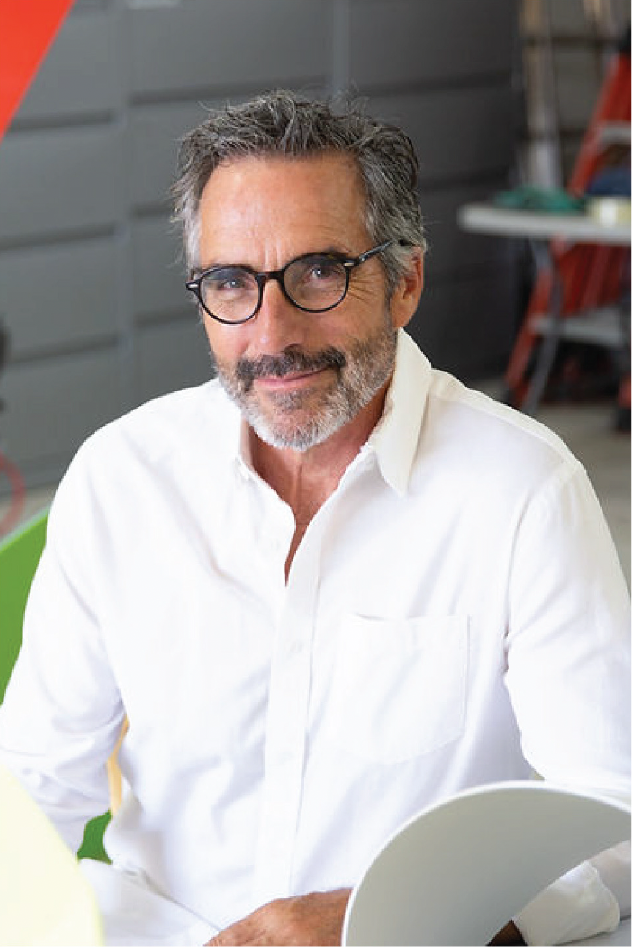
BRAD HOWE
-
With a busy studio in Los Angeles—not far from Riverside, where he was born—Brad Howe has established himself as one of today’s leading sculptors, with projects spanning over seven countries and installations in locations as varied as Biberach, Germany, and the Beverly Hills City Hall.
His work can be found in major museum and institutional collections, including the Crocker Art Museum in Sacramento, the Honolulu Museum of Art, MIT, Temple University, and UCLA.
Howe studied at Stanford University and the University of São Paulo in Brazil. Initially majoring in international relations and economic history, he was drawn to the architecture studios, where a fascination with aesthetics replaced his focus on policy.
“I fell in love with the making of models,” he recalls. That early shift inspired his lifelong engagement with form, movement, and light.Howe’s first works were mobiles, sparked by an early admiration for Alexander Calder.
His practice has expanded to include monumental public works, architectural collaborations, and site-specific commissions. His sculptures are included in numerous public and corporate art collections, such as Cedars-Sinai Medical Center, The Walt Disney Company, General Mills, Lowe’s Corporation, and The Cities of Los Angeles and Houston. Known for his dynamic sense of scale and playful color sensibility, Howe’s work has garnered an international following.
1
-
patinated bronze,
89” x 33” x 21”
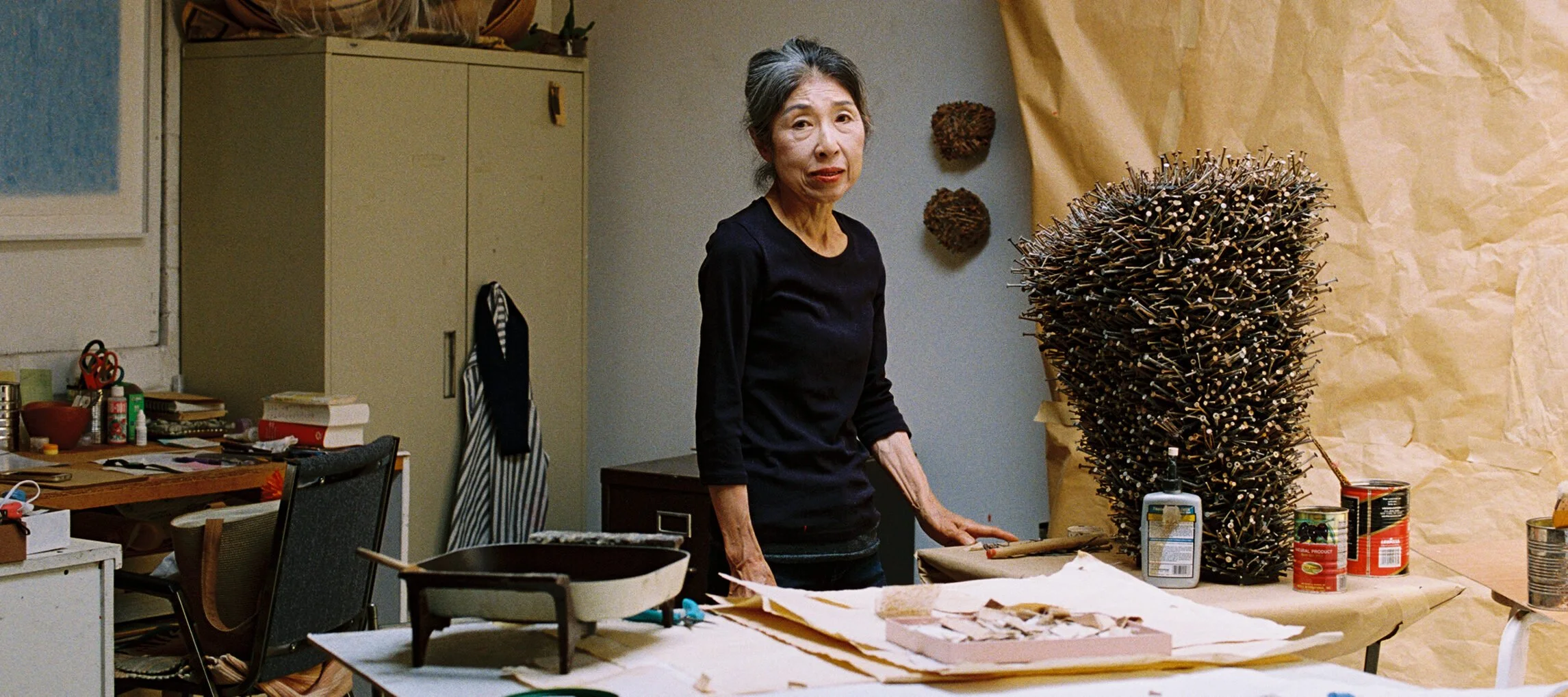
ECHIKO OHIRA
-
Echiko Ohira is a Los Angeles-based artist known for her intricate sculptural works composed primarily of repurposed paper, thread, nails, and found materials. Originally from Japan, Ohira draws from a lifelong relationship with paper rooted in Japanese craft traditions, architecture, and everyday material culture.
Through repetitive, labor-intensive processes of folding, layering, tearing, staining, and assembling, she transforms humble materials into meditative organic forms that evoke natural systems, cellular structures, and spiritual landscapes.
Ohira’s practice explores themes of transformation, impermanence, healing, and interconnectedness. Her works often emerge through intuitive accumulation and meticulous handwork, balancing delicacy with structural complexity.
For more than three decades, Ohira has developed a distinctive body of work that has been exhibited extensively throughout the world. Her work has been featured at institutions including Craft Contemporary and the National Museum of Women in the Arts, where her intricate paper constructions have been recognized for their poetic materiality and contemplative presence.
2
-
paper, paint, mixed media,
24” Diameter x 14” Depth
3
-
paper, paint, mixed media,
22” Diameter x 15” Deep
4
-
paper, paint, mixed media,
14” Diameter x 10” Depth
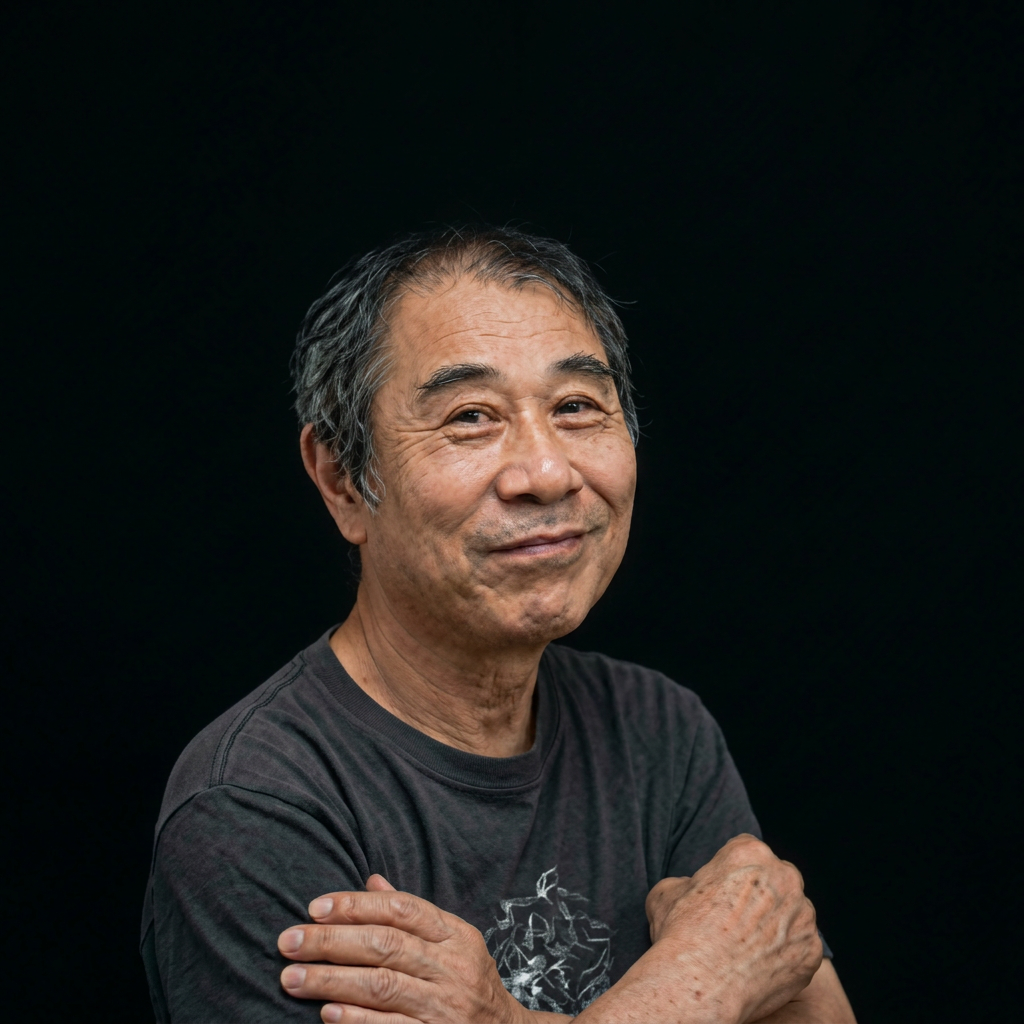
MINORU OHIRA
-
Minoru Ohira is an artist who was born in Niigata, Japan. He received a Bachelor of Fine Arts degree from Kanazawa City Arts and Crafts College in 1975 and a Masters in Art Education from Tokyo University of the Arts in 1977. His art studio is now based in San Gabriel, CA.
Minoru is influenced by nature and natural materials as well as his time in living in Mexico. The majority of the materials he uses are recycled, making for sustainable artistic works. Minoru creates with a wide variety of wood, metals, slate, and more.
His works have been presented internationally since the 1970s. Recent commissions and museum collections include Los Angeles County Museum of Art, Hokkaido Asahikawa Museum of Art, Niigata City Art Museum, The National Gallery, Bangkok, Hara Museum of Contemporary Arts, Mexico National Museum of Art, MGM Grand Hotel, Coca-Cola Corporation Headquarters, and many more.
5
-
recycled wood,
29.5” x 41.5”
6
-
recycled wood, 30.5” x 48.5
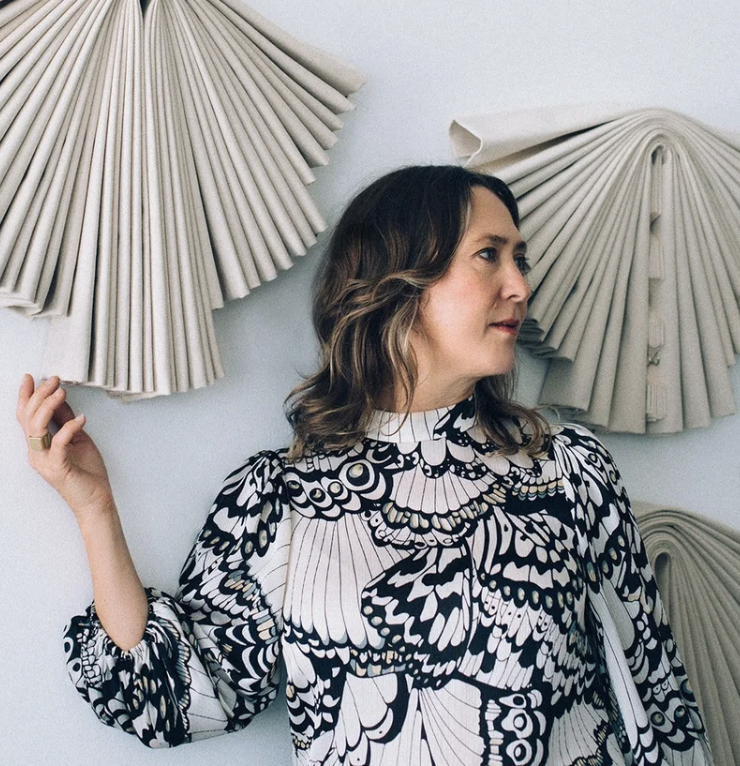
SUSAN MADDUX
-
Susan Maddux is a multidisciplinary artist of mixed Japanese descent whose work explores themes of perception, materiality, and cultural reconnection.
Her practice involves painted and pigment stained raw canvas and accordion-folded wall hangings that unfurl and cascade, surrendering to the weight of the material itself. These works echo the curves of draped fabrics, challenge traditional boundaries and investigate themes of reverence and visual inquiry, prompting viewers to consider not only how they see art but also what they might be missing.
A fourth-generation hapa-Japanese, Maddux was born and raised in Hawaii, with periods spent on the mainland United States during her upbringing. Her artistic practice is deeply engaged in creating a personal formal language that reconnects her with both her cultural heritage and lineage.
Drawing from her background as a textile designer, Maddux integrates gestures of domestic labor, traditional garment construction, and folk craft into her work. In an era dominated by virtual contact and technology, Maddux’s work asserts the importance of the tangible, emphasizing that material knowledge passed on through our hands is what keeps us connected.
Her work has been presented in various national exhibitions and acquired by global collectors.
7
-
acrylic on sculpted canvas,
31” x 21” x 3.5”